


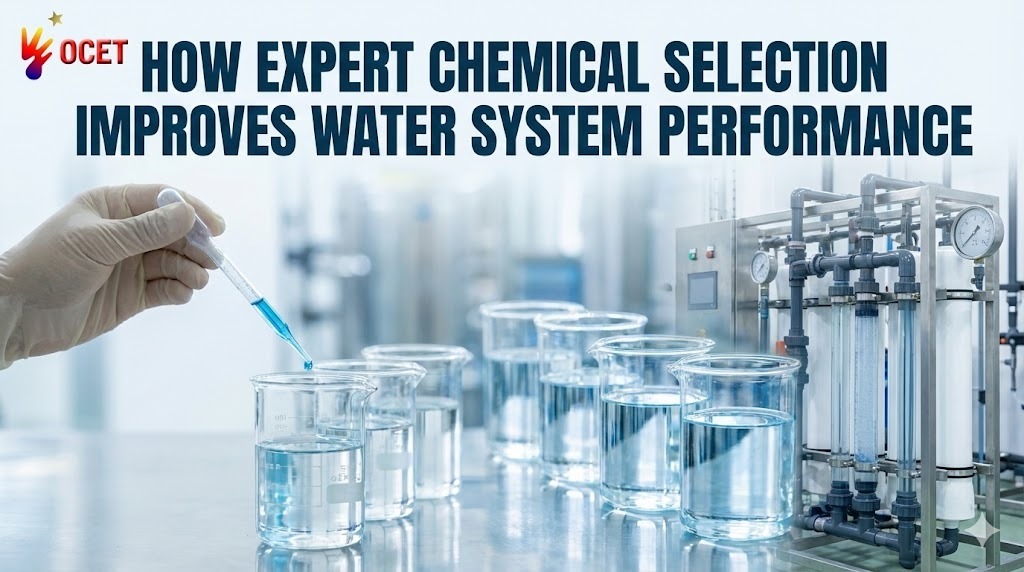
Water supply systems represent the backbones of industries like manufacturing, power plants, oil & gas, food processing, and other commercial facilities. Starting from cooling towers and boiler plants to wastewater plants, the quality of water has major implications on efficiency, durability, and standards of the system. Perhaps the most important, but often underrated, elements in determining efficiency have been appropriate chemical selections.
Appropriate water treatment chemicals, determined by the water system design and water parameters, would go a long way in improving efficiency and cost control. In this blog, you will read about how specialized water treatment chemicals increase water system efficiency and why it is important to consult with specialists on water management.
Common Water Treatment Issues Arising from Inappropriate Chemical Selection
Inappropriate chemical choice is one of the factors that contribute to a high failure rate in water treatments systems. Generic or trial-and-error chemical treatment tends to create operational problems for many treatment systems.
Common issues that arise are
- Deficient scale control, resulting in losses of heat transfer
- Rapid Corrosion, leading to equipment failure
- Bacterial growth, leading to biofouling and health hazards
- Foaming or Sludge Formation, Decrease System Efficiency
- Chemical Incompatibility, Damage to membranes, seals or pipes
For instance, wrong biocides might not combat bacterial growth in cooling towers, while an overdose of corrosion inhibitors might cause water chemistry imbalance. Skilled chemist experts always ensure that selected chemicals are appropriate according to the operational conditions of the system, water sources, and standards, hence eliminating these avoidable challenges.
How Scaling & Corrosion Affect Water System Efficiency
Among the most value-destructive issues with water systems, scaling and corrosion take front row, directly influencing performance and energy efficiency.
Scaling
Scale forms when minerals such as calcium, magnesium, and silica precipitate and deposit on the heat exchange surfaces. Even thin layers of scale can
- Reduce the efficiency of heat transfer by up to 20–30%
- Increase energy consumption
- Cause overheating and system failure
Corrosion
Corrosion weakens the surface and is a leading contributor to leaks, contaminations, and unplanned shutdowns, while common causes are due to improper pH control, high dissolved oxygen, and incompatible chemicals.
Specifically selected scale inhibitors, corrosion inhibitors, and dispersants prevent deposit formation on heat transfer surfaces, protect metal components throughout the system, and stabilize water chemistry. Properly formulated, dramatic improvements in system efficiency and significant equipment life extension are realized.
Water Treatment Chemicals for Industrial Purposes
The use of water treatment chemicals in industry demands many specialized chemicals, usually with specific functional use patterns. The best use is determined by experts.
Some key chemicals used in water treatment include:
- Coagulants and Flocculants – Used for suspended solid removal in raw water and wastewater treatment
- Scale Inhibitors: These prevent the deposition of minerals in boilers, cooling towers, and RO units.
- Corrosion Inhibitors – Prevent corrosion of metal by chemical or electrochemical action
- Biocides and Disinfectants – Bacteria, algae, and biofilm control
- pH-adjustment agents should satisfy the following functions: pH-adjustment agents – pH
- Antifoams & Defoamers – Prevent foam formation in industrial processes
- Oxygen Scavengers – Prevent corrosion in boiler systems
In fact, for each industrial use, such as the use of power plants, refineries, and manufacturing companies, there is a specific chemical program required. The application of chemical knowledge helps ensure that these chemicals interact synergistically and not create a chemical imbalance.
Comprehension of Water Parameters Prior to Selecting Chemicals
One of the most common errors made in water treatment is the use of chemicals without knowing the water quality. Professional consultants start with an analytical study of water to assess key parameters such as:
- pH level
- Total Dissolved Solids (TDS)
- Hardness (calcium & magnesium)
- Alkalinity
- Chloride & sulfate content
- Dissolved oxygen
- Microbial load
The various sources of water—municipal supply, borewell water, surface water, and seawater—each have their own set of distinctive chemicals. Chemical dosing without this information would
Specialists make use of these requirements in designing a treatment plan that will ensure a balance of water in the system, thereby preventing stress.
Compliance and Safety Standards for Water Treatment Chemicals
Industrial Water Treatment is performed under rigid environmental, safety, and governmental requirements. Failure can result in massive fines, shutdowns, and loss of reputation.
Important considerations for compliance with the legislation include
- Regulations on Environmental Discharge
- Worker Safety Guidelines & Handling Chemicals Guidelines
- Industry-specific standards (power, food, pharmaceutical, oil & gas)
- Compatibility of the material used and the warranty provided by
It is ensured by expert consultants that the chosen chemicals are safe according to local as well as international requirements, documented, along with their suitability for use. They also provide services in managing storage, handling, and dosing techniques.
How Expert Consultation Helps Reduce Costs of Water Treatment
While expert consultation may seem like an additional expense, it significantly reduces total water treatment costs in the long run.
Here’s how expert chemical selection saves money:
- Optimized chemical dosing in order to avoid overuse or wastage.
- Reduced equipment downtime and maintenance costs
- Lower energy use because of a more effective heat transfer
- Extended equipment life to delay capital replacement
- It prevents emergency failures, leaks, and corrosion damages.
Rather than reacting to problems, expert consultation deals with preventive treatment. It ensures consistent performance and predictable operating costs. This proactive approach will deliver measurable ROI for industrial facilities.
Why Expert Chemical Selection Is a Strategic Advantage
The efficiency and effectiveness of water systems go beyond only chemicals—rather, it is about selecting the right set of chemicals at the right dosage and ratio. Where appropriate selection is applied, water treatment becomes a maintenance exercise and not an operational element.
To ensure that the focus is on scaling, corrosion, water quality, safety, and cost, an expert consultation protects:
- Increase in reliability of the system
- Increased operational efficiency
- Long-term cost savings
- Environmental and regulatory compliance
For sectors that need continuous water services, collaborations with water treatment specialists are not an option—it’s a must.